
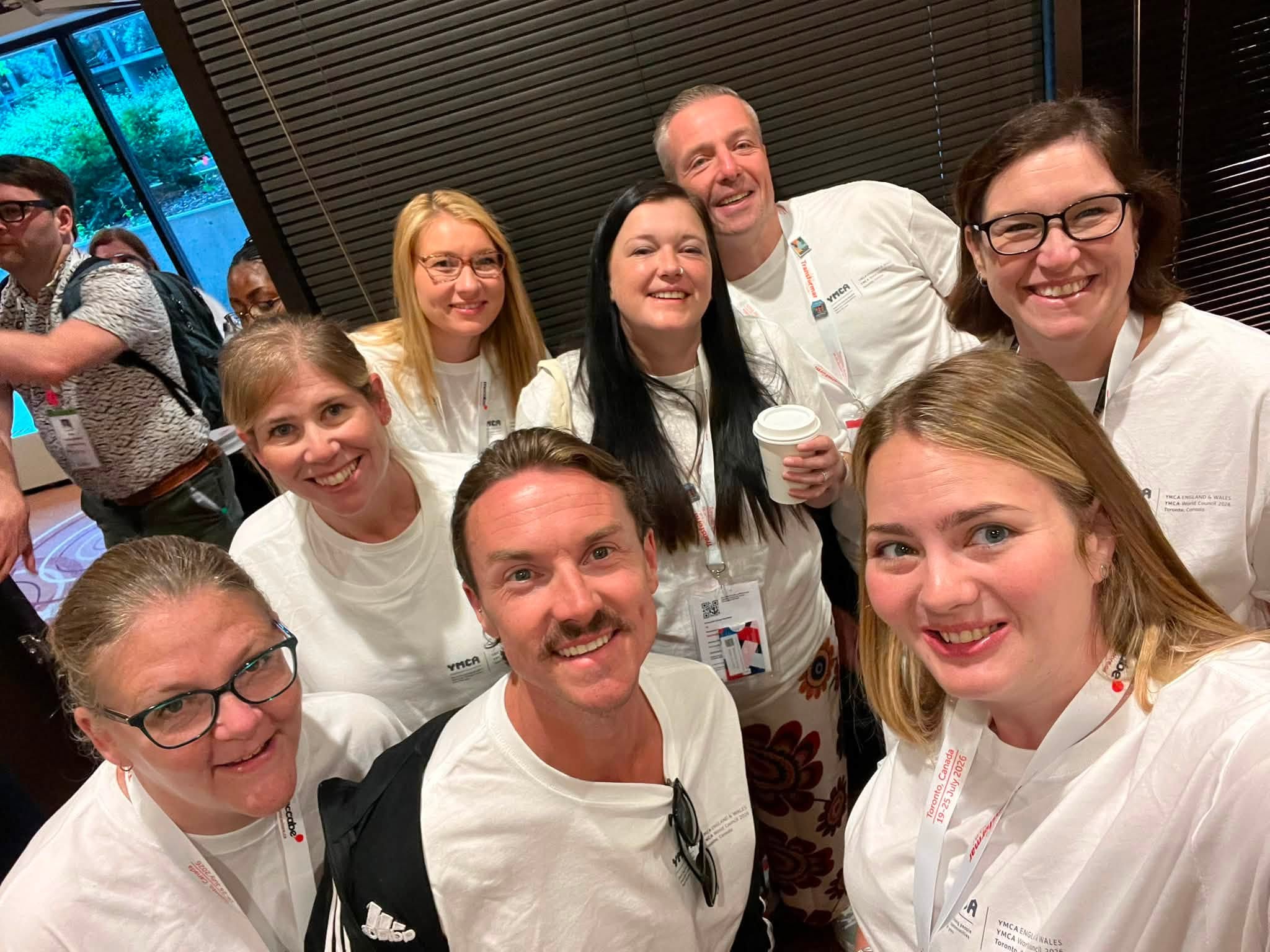
YMCA World Council brought together people from across the global YMCA movement to share ideas, challenge thinking and explore what the future could look like.
For Jo Pike, Volunteer Manager at YMCA Fairthorne Group, the experience wasn’t about returning home with a list of programmes to copy. It was about coming back with new questions, new connections and plenty to think about.
We caught up with Jo to hear what stood out, what challenged her thinking and, importantly, what some of that learning could mean for us here at Fairthorne Group.
Jo, now you’ve had some time to reflect, what has stayed with you most from World Council?
Jo: Probably the realisation that we’re already doing lots of great things, but there’s still so much more we could do.
Being around YMCAs from across the world gives you a completely different perspective. You see different approaches, hear how other people have tackled challenges and start questioning some of your own thinking.
For me, a few themes kept coming back: being intentional about what we’re trying to achieve, really understanding a problem before jumping to the solution, giving young people meaningful influence, and creating partnerships where learning and opportunity work both ways.
Was there a particular session that changed the way you thought about something?
Jo: One session asked, “What if YMCA became the world’s best pathway to work?”
It’s a massive question, and my instinct would probably have been to start thinking about programmes or solutions. Instead, we were encouraged to break the problem down first.
We looked at young mothers in South America and started by asking what they actually needed to be able to work. Things like flexible childcare, knowing their children were safe and feeling that their time and contribution were valued all came up.
Only then did we start looking at possible solutions.
That really stayed with me. We can be very quick to go into solution mode, but sometimes we need to spend longer making sure we properly understand the problem first.
Youth voice was another big theme. What challenged you there?
Jo: I think the challenge was moving from youth voice to youth power.
We heard examples from YMCAs where young people are involved through youth boards, young trustees and other leadership structures. It made me think about the difference between asking young people what they think and actually giving them some power to influence what happens.
We already do this in different ways. Young people help influence our Youth Services curriculum, children make choices throughout their day in Early Years, and young carers give us feedback that helps shape the Young Carers Festival.
But could we go further?
If we ask young people for their views, they need to see what happens because they spoke up. We also need to give them the skills and confidence to participate properly and the freedom to bring their own ideas.
One phrase used in the session was “lean into the chaos”, and I loved that. If we genuinely want young people involved, we have to accept that they may approach things differently from us. That’s part of the point.
You also spent time exploring international partnerships. What opportunities did you see there?
Jo: Fairthorne has a fantastic history of welcoming international volunteers, but World Council made me think more about how those relationships could become genuinely two-way.
Some YMCAs have created partnerships where people travel in both directions, so it becomes about shared learning and exchange rather than simply receiving volunteers.
There are already some exciting conversations beginning. We’ve made connections with camps in New Zealand, and through YMCA San Diego there could potentially be opportunities around international volunteering and exchange.
It doesn’t mean copying exactly what somebody else does. It’s about asking, what could our version of that look like?
There was also quite a lot of discussion about measuring impact. What did you take from that?
Jo: That we need both the numbers and the stories.
Data is important because we need to know whether something is working and whether we’re actually addressing the problem we set out to solve.
But some of the most important things YMCA creates are difficult to put into numbers. How do you measure trust, confidence, belonging or the importance of a relationship with somebody?
The numbers tell us about scale. The stories help us understand what actually changed for somebody because YMCA was there.
Neither replaces the other. We need both.
You weren’t only attending World Council; you also helped facilitate a session. Tell us about the Tomorrow Party.
Jo: That was definitely a personal highlight.
I’ve been training in the Tomorrow Party methodology for about six months, and at World Council I had the opportunity to facilitate a session alongside the Director for People at Pittsburgh YMCA.
We asked people to imagine their YMCA two, four and eight years into the future. Rather than immediately thinking about all the barriers, we asked them to imagine what people would be experiencing, what impact they would see and what their YMCA would feel like.
There’s something really powerful about allowing yourself to imagine that future first and then working backwards to understand how you might get there.
It’s definitely an approach I think we could use in our own future planning.
So, what happens now? How do we bring World Council home?
Jo: For me, it isn’t about coming back with a long list of things other YMCAs are doing and saying we should do them too.
We’re different. Our communities are different, our services are different and what works somewhere else may not necessarily work here.
But we can learn from the questions other YMCAs are asking.
I’d like us to keep focused and be intentional about the impact we want to create. I’d like us to keep listening properly, explore how our international partnerships could develop and continue thinking about how young people can become increasingly active in shaping our charity.
World Council reminded me that we’re part of something much bigger. There’s a huge amount we can learn from across the YMCA movement, but the exciting part is working out what that learning could mean here.


