
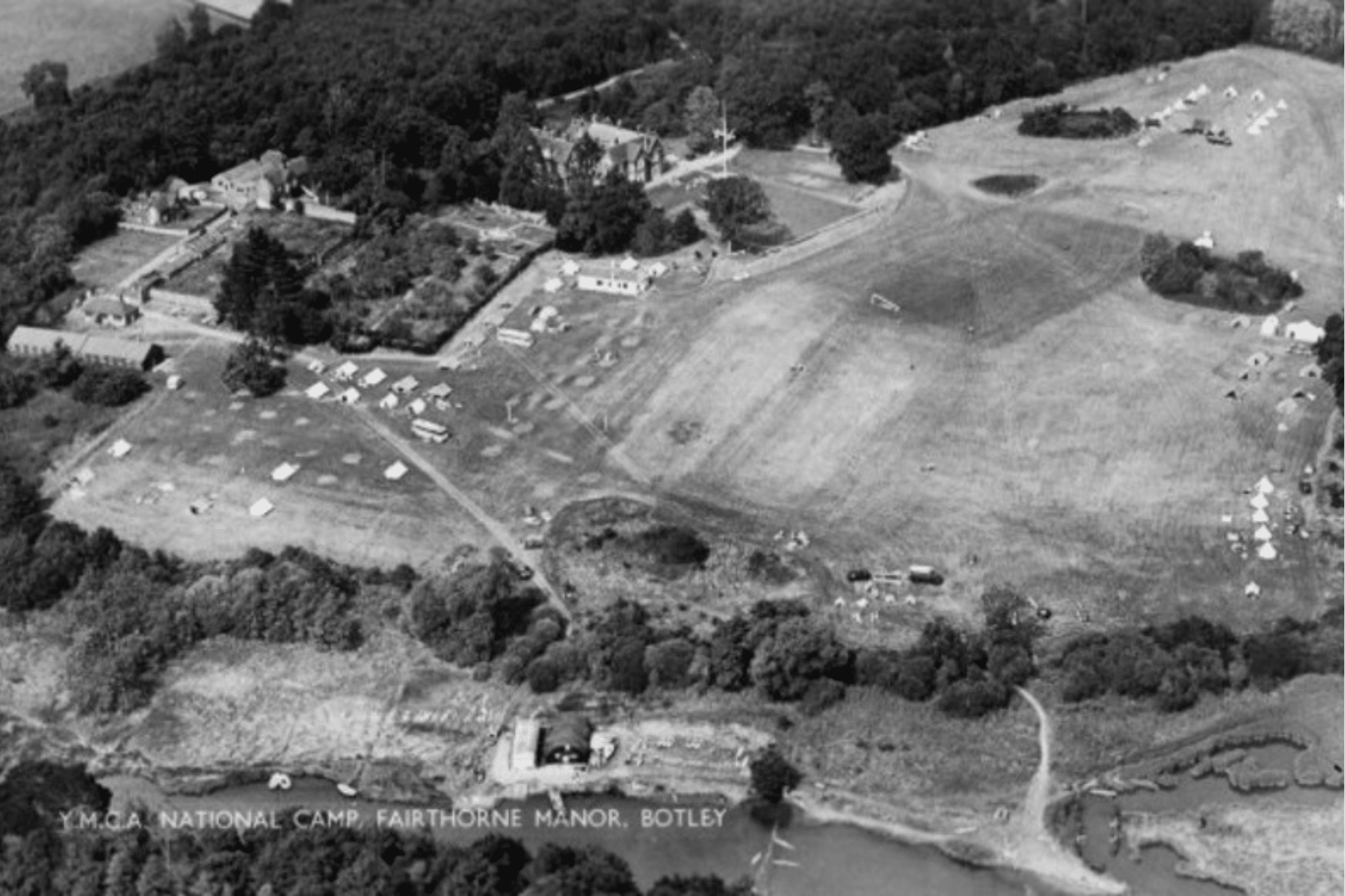
Earlier this year, a metal detecting survey at Fairthorne Manor revealed something remarkable: physical traces of the soldiers who once trained, rested and prepared for action on our grounds during the Second World War.
Led by Steve Morgan of the Portchester Metal Detecting Club, the survey focused on woodland areas, former Nissen hut locations and open lawn spaces across the estate.
What emerged was a layered story of military activity – and everyday life.
Evidence of Wartime Training
In a former survival area, ten .303 bullets were discovered close together beneath a tree. Their proximity suggests surplus ammunition may have been discharged into the ground.
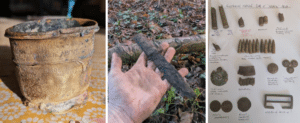
Recovered items include:
- .303 casings dated between 1918 and 1943
- A 1942 American .30-06 cartridge
- 9mm and .380 calibre ammunition used by British and Commonwealth forces
- A WWII Royal Engineers cap badge
- General Service and “Kenworthy” uniform buttons
- George V and George VI coins
The mix of British, American and Canadian manufacture reflects the cooperation of Allied forces during the war.
The Manor at War
Records confirm the British Army moved into part of Fairthorne Manor in 1940 while the Barrington family remained in residence. The house is believed to have been used as a map centre during preparations for the Normandy invasion.
Regimental insignia found on site – including Essex and East Lancashire connections – link Fairthorne to wider wartime movements across Hampshire.
Beyond military hardware, smaller finds offer quieter moments. A sterling silver mechanical pencil. A jar of 1940s face cream. A worn halfpenny. Uniform buttons scattered in woodland. And a fork stamped with a service number – perhaps dropped in a moment of urgency when soldiers were called back into action.
Fairthorne has always been a place of purpose.
From private residence to wartime base, to the vibrant site supporting children, young people and families today – the land carries stories of resilience and service. This survey doesn’t just uncover objects. It reconnects us to the people who stood here before us.
History hasn’t disappeared.
It’s been beneath our feet all along.


