
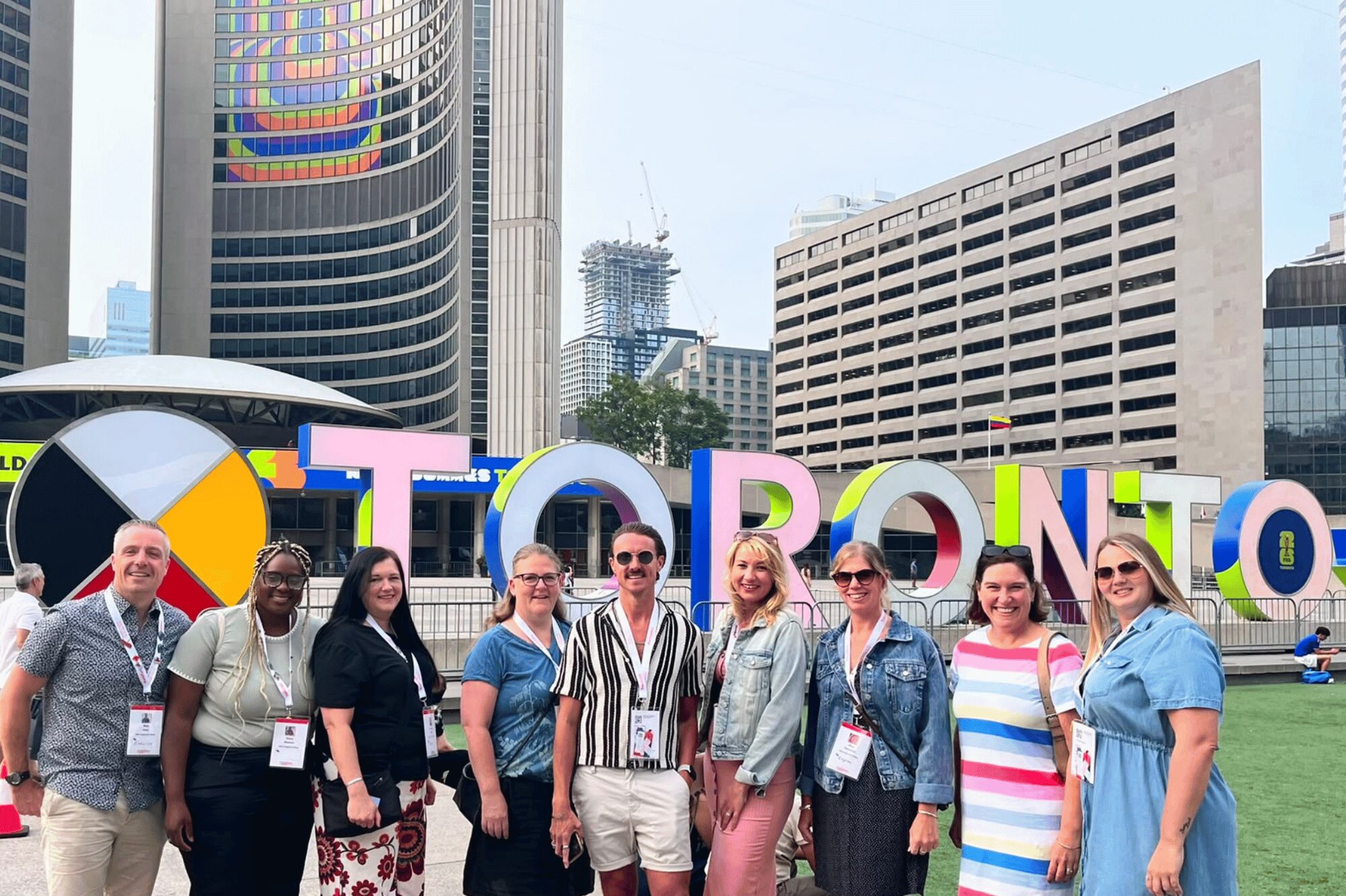
Following Jo Pike’s reflections in the last edition of Common Ground, we’re continuing to bring the learning from YMCA World Council back into conversations here at YMCA Fairthorne Group.
This time, Ross Owen shares what stayed with him after Toronto, from seeing how another YMCA creates lifelong pathways for young people, to thinking differently about former colleagues, technology and the value of being connected to a global movement.
What stood out most when you came away from World Council?
Probably the sheer sense of connection.
Around 1,200 people from more than 80 countries came together, and despite the obvious differences between the communities we serve, there was so much common ground in the challenges we face and what we’re trying to achieve.
You realise very quickly that we’re not working in isolation. Somewhere else in the YMCA movement, someone may already have tackled a challenge we’re facing, tried something differently or learned something we can benefit from.
For me, that’s one of the biggest opportunities World Council creates: not necessarily finding ideas to copy, but finding people and perspectives that make us question how we do things.
Was there anything you saw that made you think differently about Fairthorne?
Our visit to Cedar Glen YMCA really did.
Like Fairthorne, it’s an outdoor centre where children experience adventure, learning and personal growth. What struck me, though, was how intentionally they’ve created a journey through the organisation.
A child might first be a part of their early years nursery, return on a school residential, return as a summer camper, become a camp counsellor at 17 and then join the staff team at 18.
It made me wonder whether we always see the different experiences we offer as connected.
Someone’s first encounter with YMCA doesn’t necessarily need to be their last. How do we create opportunities for a child, young person, volunteer or colleague to continue their relationship with us as their life changes?
And that idea of staying connected extended to former colleagues too?
Absolutely.
We spoke about alumni and it highlighted how easily people can leave an organisation and simply disappear from its network.
Yet think about the number of people who have worked or volunteered with YMCA Fairthorne over the years. They’ve gone into different careers, communities and organisations, but many will still carry experiences, relationships and values from their time here.
There could be real value in maintaining that connection, whether through a simple alumni network, occasional communications or opportunities to reconnect with YMCA.
I’d love us to think about YMCA not simply as somewhere somebody once worked, but as somewhere that remains part of their story.
AI was also a significant conversation at World Council. What did you take from that?
The most useful part was that the conversation wasn’t really about replacing people.
It was about asking where technology can remove repetitive work, improve efficiency and ultimately give people more time to do the things humans are best at, particularly building relationships.
There was also a strong emphasis on governance, safeguards and responsible implementation.
For an organisation like ours, that’s important. Technology shouldn’t change why we exist. Used thoughtfully, it should give us more capacity to deliver that purpose.
What do you want colleagues to take from your experience in Toronto?
That we don’t need to come home with a checklist of things to implement.
I’d rather we come home with better questions.
How intentionally are we creating journeys through YMCA? Could somebody who comes to us as a child still be connected with us ten or twenty years later? How do we maintain relationships with people who have contributed to our organisation? Where could technology genuinely give colleagues more time to focus on people?
World Council reminded me that being part of a global movement gives us an extraordinary opportunity to learn from one another.
The important bit now is what we do with that learning here at home.
One thought Ross brought home:
“Someone’s first experience of YMCA shouldn’t be their last. We have an opportunity to create relationships that can last far beyond a single programme, role or moment.”


