
A Message from our CEO – Phillipa Spicer
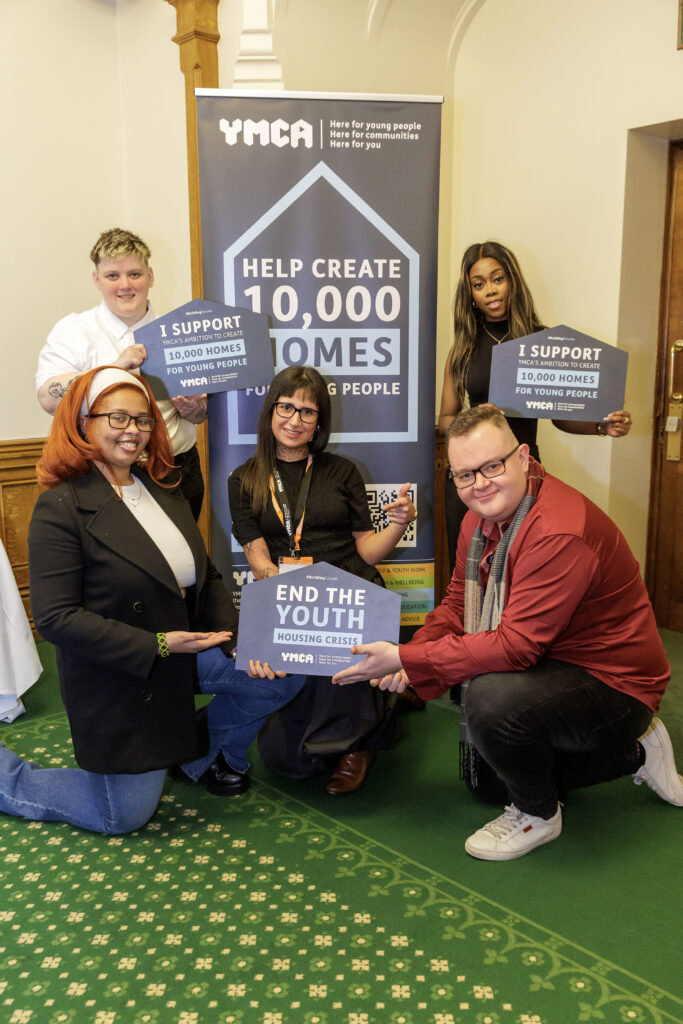
At the end of January, I attended the launch of YMCA England and Wales #BuildingFutures initiative at the House of Commons. It was an important moment to come together with colleagues from across the federation and reflect on the scale of the housing challenges facing young people, and on the responsibility we share to respond in ways that genuinely make a difference.
Across the UK, too many young people are struggling to access affordable safe, stable housing at the very point when they are trying to build independence, pursue education or training, and move into work. Housing insecurity doesn’t sit in isolation. It affects mental health, confidence, relationships and long-term opportunity. The #BuildingFutures initiative rightly brings renewed focus to this reality and to the need for practical, sustainable solutions.
Safe, stable accommodation and trusted support
Here in Hampshire and the Isle of Wight, these pressures are very real. Demand for affordable housing continues to outstrip supply, the private rental market is increasingly out of reach for many young people, and local services are operating under sustained pressure. For those without strong family support or a stable home environment, the risk of insecure accommodation can quickly become a barrier to progress.
Practical help to build skills, confidence and independence
At YMCA Fairthorne Group, supporting young people has long been central to our work. Through housing support, community services and wider programmes, we work alongside young people not only to provide a safe place to live, but to help build the confidence, skills and resilience they need to move forward positively. Our approach is rooted in early intervention, practical support and strong local partnerships, because lasting change happens when services are connected and responsive to local needs.
Being part of the launch at Parliament reinforced for me how important it is that national ambition is matched by local action. While policy discussions may happen in Westminster, it is in our communities, through the commitment of staff, volunteers and partners, that change is delivered day in, day out.
As we look ahead, our focus remains clear: to champion young people, to play our part in tackling housing challenges locally, and to ensure our services continue to deliver meaningful, positive impact across Hampshire and the Isle of Wight. The #BuildingFutures initiative is a timely reminder of why this work matters, and of what can be achieved when purpose, partnership and local delivery come together.
Phillipa Spicer
Chief Executive, YMCA Fairthorne Group
Housing need for young people in Hampshire & the Isle of Wight
Why this matters
Across Hampshire and the Isle of Wight, many young people are struggling to find a safe, affordable place to live at the point they want to move into independence.
- 101,460 young people (16–24) in England asked their council for help with homelessness in 2023/24 — a 12% increase on the previous year.
- Young people are one of the largest age groups approaching councils for housing support.
A stable home is the foundation for work, learning, health and confidence. Without it, young people are far more likely to fall into crisis — costing individuals and communities far more in the long run.
What’s the driving pressure
1. Housing costs are out of reach
- Across England, the average home costs around 7–8 times average earnings — far beyond what most young people can afford.
- Parts of Hampshire are among the least affordable areas in the South East.
- On the Isle of Wight, affordability ratios have reached 8–10 times local earnings in recent years.
For young people in entry-level or lower-paid work, this often means private rents take up well over a third of income, or independent living simply isn’t possible.
2. Demand is rising faster than affordable supply.
- New homes are being built, but not enough are genuinely affordable for young people.
- There is a particular shortage of:
- One-bed and studio homes.
- Shared and supported housing for young people who need a stepping stone.
- Nationally, social housing supply has not kept pace with population growth or demand.
This leaves many young people stuck — unable to move on, move out, or move up.
3. Youth homelessness is real — and often hidden.
- Young people aged 16–24 consistently make up a significant share of homelessness approaches.
- Many never appear in official figures because they are:
- Sofa surfing.
- Staying temporarily with friends or family.
- Living in insecure or unsuitable accommodation.
Hidden homelessness delays support and makes problems harder — and more expensive — to fix later.
4. The Isle of Wight risks losing its young people
- Evidence shows the Island has a lower proportion of young adults than comparable areas.
- Housing affordability and limited options are key reasons young people leave to find opportunities elsewhere.
- This has long-term impacts on:
- The local workforce.
- Essential services.
- Community sustainability.
Affordable housing is critical if young people are to stay, work and build lives locally.
What this means in everyday terms
For many young people, the reality looks like:
- Staying longer in crowded family homes.
- Paying unaffordable private rents.
- Moving frequently or living insecurely.
- Leaving their home area altogether.
None of these support young people to thrive or plan for the future.
Why YMCA’s ambition matters now
The YMCA’s national ambition to deliver 10,000 affordable homes for young people over the next five years directly responds to this growing need.
For YMCA Fairthorne Group, this means being ambitious for young people across Hampshire and the Isle of Wight — helping to:
- Prevent homelessness before it happens.
- Provide affordable routes into independence.
- Offer the right support alongside housing where needed.
A home is not the end goal — it’s the starting point for a brighter future.
The opportunity for local partners
Evidence shows that when young people have:
- A stable home.
- Affordable costs.
- The right support.
they are far more likely to stay in work or education, contribute locally, and build long-term, resilient communities.


